RentMate is a peer-to-peer rental platform that allows people—including temporary residents and short-term visitors— to borrow everyday items from others in their local area, from tools to camping gear and beach essentials.
The platform focuses on short-term, flexible rentals, enabling users to access items without the cost and commitment of ownership.
The goal is to build a trusted, community-driven marketplace that promotes:
Sustainability (access over ownership)
Convenience
Affordability
Problem
Many people face a common frustration:
- Items like camping gear, beach equipment, or tools can be expensive to buy
- They are often used only once or occasionally
- Owning them creates clutter and waste
Australia has a large population of temporary residents, backpackers, and short-term visitors.
- They often stay for a few months to a couple of years
- They are less likely to invest in expensive or bulky items
- They still want to enjoy activities like:
- Camping trips
- Beach days
- DIY or home setup
As a result, they frequently face a gap between access and ownership, needing items temporarily without a practical way to obtain them.
Traditional rental options:
- Are limited to specific categories (e.g., tools only)
- Have restricted hours and locations
- Can be expensive and inconvenient
At the same time:
- Many people already own items that sit unused most of the time
Key Problem Statement:
How might we enable people to easily and safely rent everyday items from others in their community, making access more convenient than ownership?
Process
1. Research
I explored:
- Peer-to-peer rental platforms
- Traditional rental services (tools, outdoor gear, etc.)
Key Insights
- Trust and safety remain the biggest barriers
- Existing platforms often feel transactional and outdated
- Users want fast, local, and flexible experiences
- Opportunity gap: multi-category rental (not just tools)
2. User Interviews
I conducted informal interviews with:
- Renters (people needing occasional items)
- Owners (people with underused belongings)
Sample Questions
- “When was the last time you needed something you didn’t own?”
- “What stopped you from renting or borrowing it?”
- “Would you rent out your belongings to others?”
Key Findings
Renters:
- Want quick access to nearby items
- Prefer simple, mobile-first experiences
- Care about quality and reliability
- Often make last-minute decisions (e.g., weekend plans)
Owners:
- Interested in earning extra income
- Have unused items across categories (tools, camping, beach gear)
- Main concerns:
- Damage
- Theft
- Need clear protection systems
3. Personas

Romina – The Temporary Local
- Backpacker / student / temporary worker
- Lives in Australia short-term
- Avoids buying items they can’t take with them
- Wants to experience local lifestyle (camping, beach, etc.)
- Needs flexible, affordable access
- Plans spontaneous trips (camping, beach days)

Dylan – Occasional DIYer
- Needs tools occasionally
- Price-sensitive
- Wants fast, local access

John – Passive Earner (Owner)
- Owns multiple useful items
- Wants to monetize unused belongings
- Needs trust and protection
4. User Journey Mapping
Key Pain Points
- Finding relevant items nearby
- Lack of trust between strangers
- Coordinating pickup/return logistics
- Unclear or hidden pricing
- Friction in listing items
5. Ideation
Focus areas:
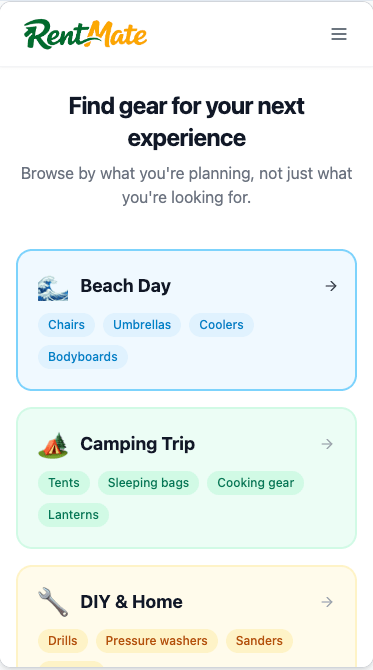
- Expand beyond tools → multi-category marketplace
- Reduce friction in both:
- Renting
- Listing
- Build strong trust signals
- Support last-minute usage scenarios
Solution
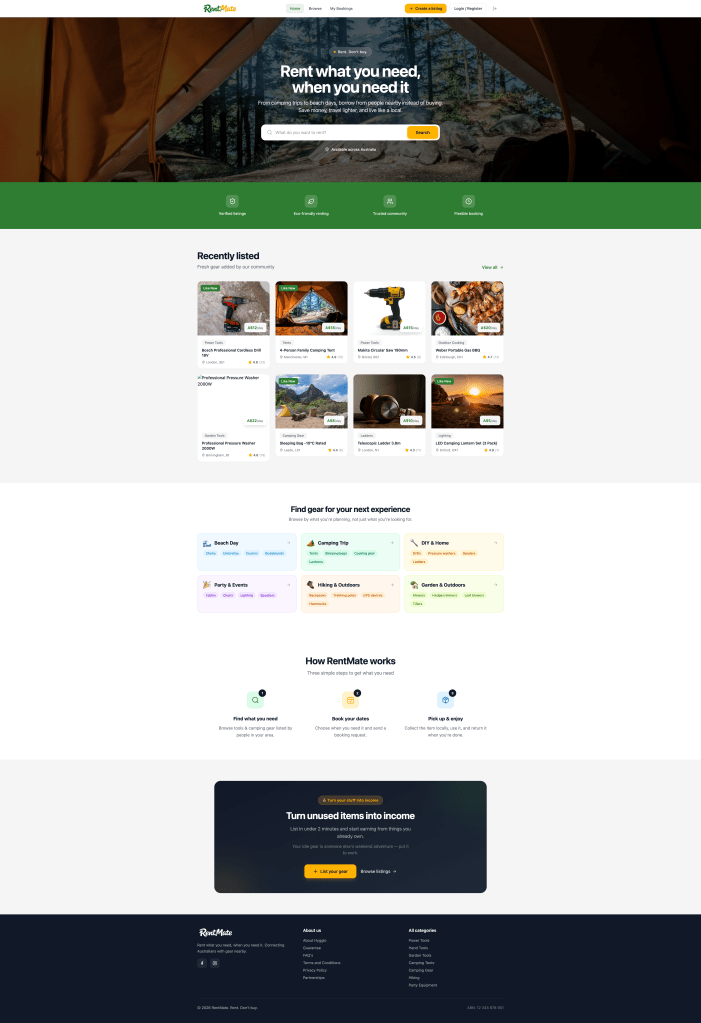
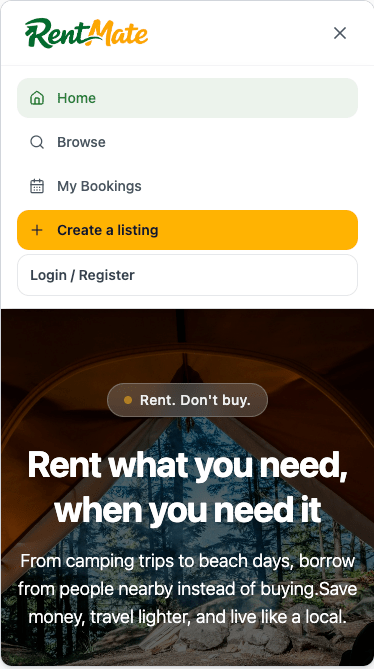
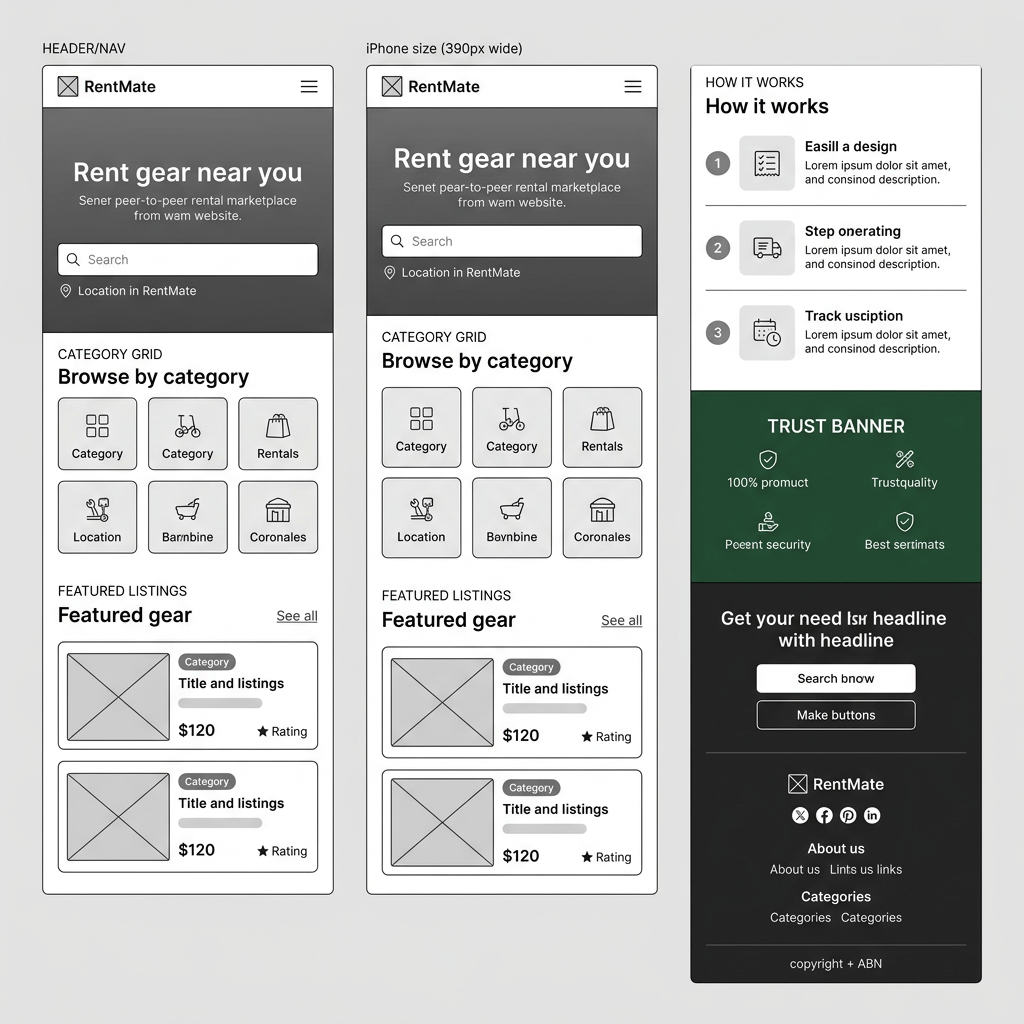
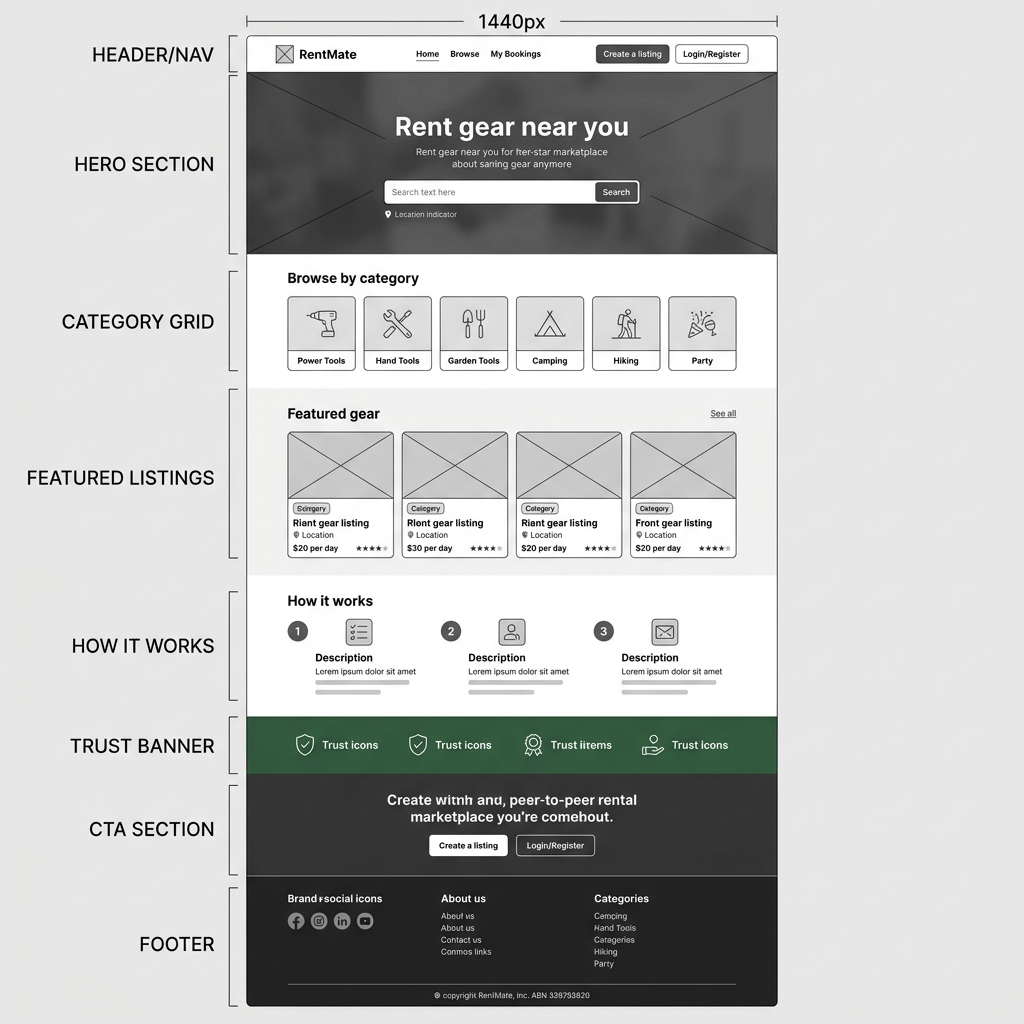
The platform: RentMate
A mobile-first platform that enables users to:
- Discover items nearby (tools, camping, beach, etc.)
- List items quickly and easily
- Book securely with minimal friction
Core Features
Smart search & Discovery: location-based browsing and filter option by price, distance, availability and category (tools, camping gear, beach essentials)
Fast Listing Experience: list an item in under 2 minutes including photos, price per day, availability calendar and category.
Trust & Sefety System: Display verified profiles, ratings & reviews, optional insurance coverage.
Seamless Booking Flow: Dates selection on calendar view, instant pricing calculator, clear pickup/return instructions.
Communication: In-app messaging, automated reminders (pickup time, return deadlines).
Key UX Decisions
- Mobile-first approach → Users often need items on-the-go or last-minute
- Category expansion (beyond tools) → Increases relevance and frequency of use
- Transparent pricing upfront → Reduces friction and builds trust
- Strong trust indicators → Critical for peer-to-peer interactions
- Simplified listing flow → Encourages supply growth (marketplace balance)
Outcome
If launched, RentMate could:
- Reduce unnecessary consumption and waste
- Enable people to earn from unused items
- Support a more circular, sustainable economy
- Become a go-to platform for everyday needs, not just tools